From R7.7 billion to R2.7 billion in a month
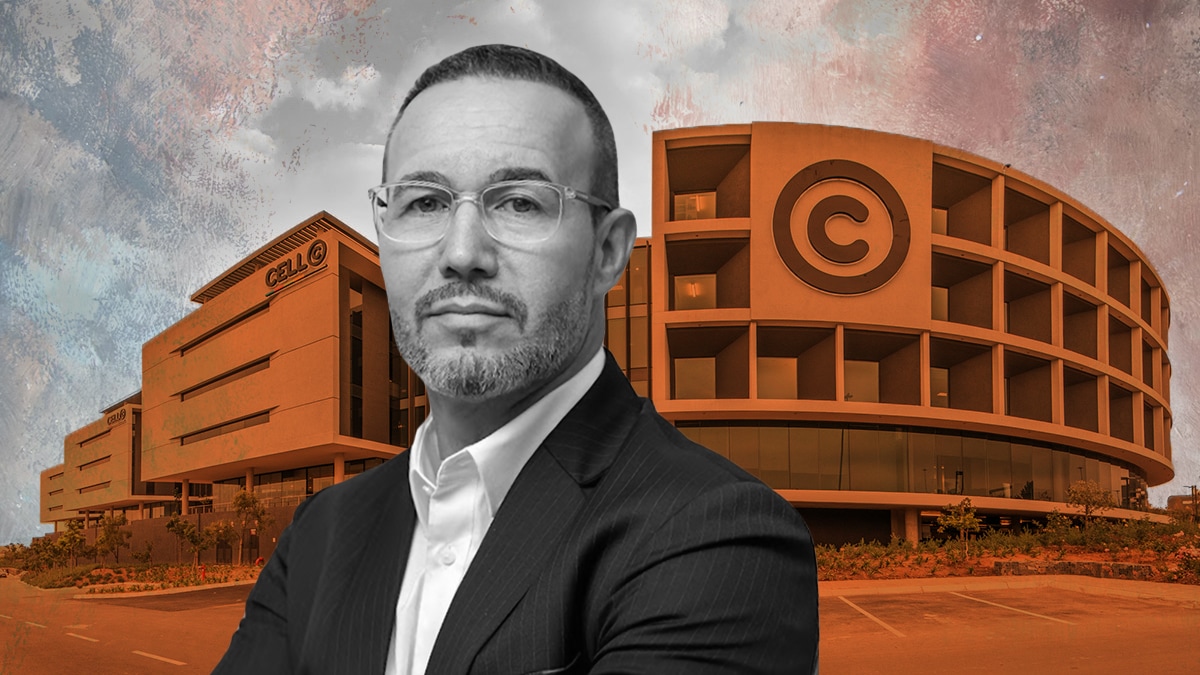

Cell C has announced that it only raised R2.7 billion of the R7.7 billion it had planned to raise with its initial public offering on Friday, 21 November 2025.
Of the 182.92 million ordinary shares it had hoped to sell, including an overallotment option, investors only bought 102 million, or 55.8%, at an offer price of R26.50 per share.
The 102 million shares sold represent 30% of Cell C’s total ordinary share capital of 340 million shares, suggesting a market capitalisation of R9 billion at launch.
However, with the IPO underperforming to this extent, it remains to be seen what Cell C’s market cap will be after its first trading day.
Cell C said its stock will list on the main board of the Johannesburg Stock Exchange (JSE) on Thursday, 27 November 2025, under the share code “CCD”.
When Cell C first announced its JSE listing on 5 November, it planned to raise R7.7 billion, including the overallotment option of about R500 million for 9.52 million shares.
This also included an allocation of up to 68 million shares valued at approximately R2.4 billion to an empowerment vehicle, referred to as the BEE SPV.
Cell C’s pre-listing presentation stated that the proceeds of the IPO would be used to settle certain interest-bearing borrowings and other debt obligations.
“Additionally, a portion of the funds will be earmarked for dividends to shareholders, reflecting Blu Label Unlimited’s commitment to delivering value to its investors,” it said.
Blu Label Unlimited, formerly Blue Label Telecoms, is Cell C’s majority shareholder through its subsidiary The Prepaid Company (TPC).
However, by 13 November, Cell C’s listing targets had been revised downward. It stated that it hoped to raise R6.5 billion through the IPO, targeting a share price of R29.50 to R35.50.
On the day of the IPO, Cell C announced that the offer price had closed significantly lower than expected, at R26.50 per offer share.
Had it sold all 182.92 million offer shares, it could have raised over R4.8 billion. Unfortunately, it sold R2.1 billion fewer shares than hoped.
BEE shareholder and lock-up arrangements
Regarding the Black Economic Empowerment (BEE) shareholder, Cell C revealed that 54.23 million of the 68 million earmarked were sold to Sisonke Growth Partners.
“Cell C and The Prepaid Company are deeply committed to advancing South Africa’s transformation agenda through meaningful and sustainable Broad-Based Black Economic Empowerment,” it said.
“The companies have taken deliberate steps to ensure that the requisite ownership structure is in place, reinforcing their dedication to driving equitable participation and long-term socio-economic impact.”
Cell C must also maintain 30% ownership by historically disadvantaged groups to comply with regulatory requirements for its network, service, and spectrum licences.
In addition to Sisonke’s shareholding, Cell C will have an additional 15% historically disadvantaged person (HDP) ownership from TPC’s shareholding using the direct flow-through principle.
Through its executive transfer scheme, it will have another 1% historically disadvantaged ownership. Accordingly, Cell C’s HDP ownership will exceed the requisite minimum of 30%.
In addition to laying out the company’s BEE standing, Cell C also explained that The Prepaid Company and Sisonke have agreed not to sell their shares for set periods.
“TPC has agreed to customary lock-up arrangements prohibiting the sale, transfer or other disposal of their ordinary shares held at admission for a period of 360 days,” it stated.
“Cell C has agreed to an equivalent lock-up prohibiting, inter alia, the issue or sale of any new ordinary shares for a period of 360 days.”
Such lock-up arrangements will be subject to certain exceptions and may be waived with the consent of the Joint Global Coordinators.
“The BEE SPV and its shareholders will be subject to a lock-up of 6 years,” Cell C said.
“For the first 12 months after the admission, the BEE SPV and its shareholders will not be entitled to directly or indirectly dispose of any ordinary shares.”
For the remaining 5 years of the lock-up, they will be able to dispose of up to 20% of the ordinary shares they hold per year.
However, this is subject to the prior consent of The Prepaid Company and only if the sale is to a party of equivalent or better B-BBEE / HDP status.
“The ordinary shares held under the executive transfer will be subject to restrictive conditions,” Cell C said.
“The company’s management team will be unable to dispose of their shares until they are no longer restricted. The senior management team does not hold any shares in the company outside of the executive transfer.”