Roam Hits Record 40% Made in East Africa, Targets Africa's First 50% Local Electric Motorcycle by 2027
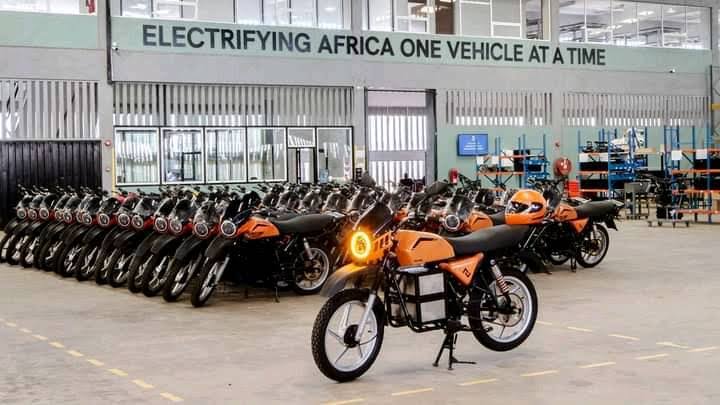

Nairobi, Kenya, 1st October 2026 — African electric mobility company Roam has reached 40% local content in its electric motorcycle manufacturing, measured by the share of bill-of-materials value, increasing the share of the Roam Air made in East Africa and expanding the role of local manufacturers in the country’s growing electric mobility industry.
More than 50 components used in the Roam Air are now produced locally and supplied by more than 10 East African companies.
Local manufacturing puts Roam’s engineers and suppliers closer to the riders using the motorcycles, allowing road feedback to reach the people designing and producing the vehicle. As Roam produces more components locally, it has worked more closely with suppliers to refine products, respond to rider feedback, and develop components suited to African operating conditions.
Increasing local production has also improved the economics of manufacturing by shortening supply chains and lead times, reducing reliance on long-distance sourcing and making greater use of locally available materials. As production volumes grow, stronger supplier capabilities have created efficiencies that help bring down production costs over time.
For riders, this has supported better access to parts, lower maintenance costs and, ultimately, more competitive products. For example, lead times for cowlings and space tanks, which were initially sourced from India, have fallen from 18 weeks to 2 weeks since they moved to local production; while purchasing and replacement of a space tank now costs riders 40% less.
Fred Omoro, a boda boda rider in Ruaraka, Nairobi, who has ridden the Roam Air since 2022, said:
“What matters to me is how quickly I can fix my bike and get back to work. When the parts are available locally, you spend less time waiting for a repair and less time off the road. For me as a rider, that matters because every day the bike is not working is a day you are not earning.”
Evidence from elsewhere in Africa points in the same direction. A 2026 Siemens Stiftung study on local electric motorcycle assembly in Nigeria found that moving from fully imported units to configurations with more than 25% local content reduced per-unit costs by approximately 41.3% in the configurations studied.
The study also found no reported deterioration in performance or durability as local content increased. The findings are from Nigeria and do not represent a direct cost saving for Roam, but they illustrate the wider economic and manufacturing case for deeper localisation.
The benefits are also beginning to extend beyond Roam’s own motorcycles. Riders outside the Roam network are now buying some locally produced components and accessories from the growing ecosystem, including helmets, side mirrors, rims, cowling, stands, and electrical components.
Additionally, Roam is ensuring the parts can be used for other brands across the whole East African region, including Rwanda, Uganda, Tanzania, and Ethiopia.
This points to a broader opportunity for local manufacturing supplying not only a single vehicle manufacturer, but an expanding market around electric mobility and the wider motorcycle sector. East Africa’s localisation drive is increasingly part of a broader East African manufacturing framework.
The East African Community (EAC) Assembling and Manufacturing of Products Regulations, 2025, which are scheduled to come into force on 1st July 2027, define local content as raw materials, parts and components manufactured within the EAC and require manufacturers to develop time-bound plans for sourcing goods made within the Community.
The regulations also establish incentives linked to the use of Community-manufactured inputs.
This creates scope for a more integrated regional supply chain, where manufacturers can increasingly source suitable components from across East Africa while building greater value addition within the region. That could include suppliers in markets such as Tanzania, subject to the applicable EAC rules of origin and standards.
Africa's regulatory framework is also moving towards deeper local value addition in electric mobility. Legal Notice 112 in Kenya of 2020 requires motorcycle assemblers benefiting from duty remission to source specified locally available parts and maintain a time-bound localisation plan.
More recently, government policy has called for phased local-content requirements for EVs and the development of a local upstream ecosystem for EV components, including support for local parts manufacturing and battery production.
Habib Lukaya, Country Manager at Roam, said:
“Reaching 40% local content is a significant milestone for us, and we are proud of how far we have come. But this is just the beginning. Our ambition is to get to a 50-50 balance, where half of the Roam Air is locally made, and half is sourced internationally. Getting there means bringing more components, such as the frame, into local production and working with more African suppliers. The more we manufacture locally, the more we can create jobs, grow African businesses, and build products around the people who use them every day.”
Tobias Alando, Chief Executive, KAM (Kenya Association of Manufacturers), said:
“As local manufacturers increase their capacity to produce more components locally, the sector can create stronger opportunities for Kenyan suppliers, develop technical skills, support quality jobs and build the capabilities needed for deeper manufacturing and regional supply chains. The focus now should be on moving further up the value chain and ensuring that the growth of e-mobility translates into broader industrial development.”