Sasol strategic initiatives progressing and tracking CMD targets
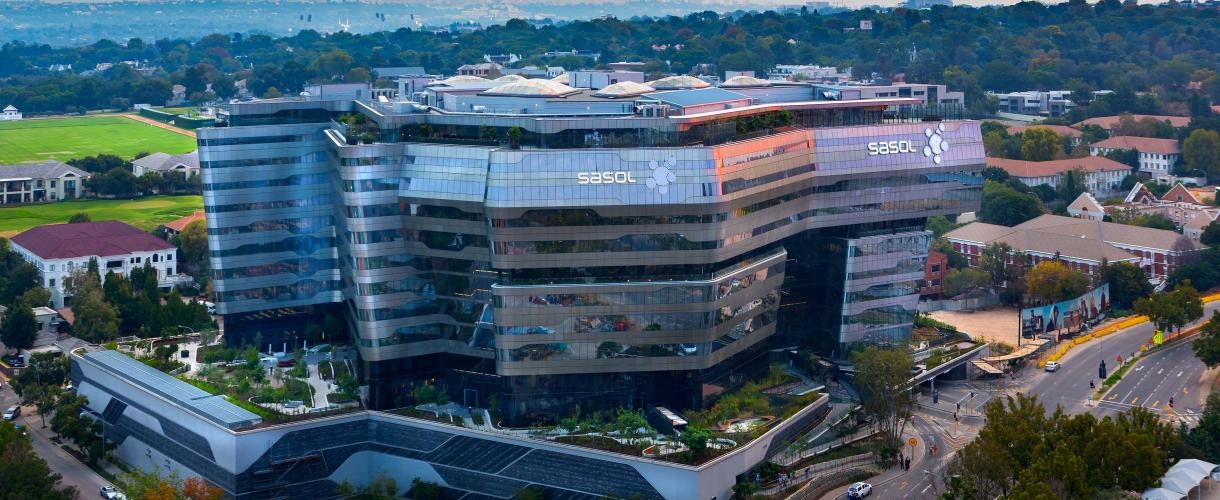

Johannesburg, South Africa – Sasol Limited (JSE: SOL; NYSE: SSL) has released its operating and financial results for the six months ended 31 December 2025 (H1 FY26). Despite challenging macro-economic conditions, the company is progressing delivery on its strategic objectives.
“We are showing consistent progress in the implementation of our strategic initiatives as set out in our Capital Markets Day plan. This is strengthening our foundation business, helping us to mitigate ongoing global market volatility and macroeconomic headwinds, building resilience for the future,” said Simon Baloyi, President and Chief Executive Officer, Sasol Limited.
Safety remains our foremost value, and we endeavour to send everyone home safely each day. Unfortunately, we did not, as we lost one of our team members in September 2025. While this loss weighs heavily on us, we are seeing an encouraging improvement in key leading safety indicators. Our commitment to safety remains unwavering as we continue to embed learnings and reinforce a strong safety culture across the business.
In the Southern Africa business, we achieved an important milestone in December 2025 when the destoning plant at Sasol Mining reached beneficial operation in line with plan and improving coal quality. This, together with higher gasifier availability and no phase shutdown, resulted in a 10% uplift in Secunda Operations’ (SO) production volumes. Disciplined cost and capital management further supported a lower cash break-even oil price.
The International Chemicals reset strategy is progressing, although market conditions were weaker than anticipated with lower US ethylene margins and muted market demand. We have made good progress on lowering our cost base, which supported a 10% increase in Adjusted EBITDA in US$ terms compared to the prior period.
The Group generated positive free cash flow in the first half of the financial year for the first time in four years, despite the challenging macro environment. This was supported by the higher sales volumes, lower cash fixed costs and lower capital expenditure. Importantly, this has been achieved without compromising asset integrity and safety.
The balance sheet remains a focus area with robust liquidity in place while we continue to hedge proactively to manage downside risk.
We continue to advance our Grow and Transform strategy. We have secured an additional 300 megawatt (MW) of renewable energy, increasing total secured capacity in South Africa to more than 1 200 MW, supporting both emission reductions and cost savings.
Our priorities are clear: safe, reliable operations; disciplined cost and capital management; proactive risk management; and improved cash generation. Consistent execution in these areas is strengthening resilience and positioning Sasol to deliver sustainable shareholder value.”
Financial performance
Sasol continued to make progress on factors within its control despite a challenging macro environment. Lower cost and capital expenditure supported positive free cash flow generation in the period.
Adjusted EBITDA of R21,0 billion was 12% lower than the prior period, primarily due to a 17% decline in the average Rand per barrel Brent crude oil price and lower average US dollar per ton chemicals basket price. This was partially offset by improved refining margins, 3% higher sales volumes driven by stronger production performance and lower cash fixed costs.
Earnings before interest and tax (EBIT) of R4,6 billion was 52% lower than the prior period of R9,5 billion and impacted by non-cash remeasurement items of R7,9 billion. This related mainly to impairments of R7,8 billion (before tax) compared to R5,7 billion in the prior period, and include the impairment on the Secunda liquid fuels refinery cash generating unit (CGU) and our Mozambican Production Sharing Agreement (PSA) gas development.
As a result of the above, basic earnings per share (EPS) decreased by 95% to R0,38 per share and HEPS decreased by 34% to R9,27 per share compared to the prior period.
Cash generated by operating activities of R11,6 billion declined 34%, mainly reflecting the lower earnings detailed above. Capital expenditure of R8,5 billion was 43% lower than the prior period. This was mainly due to no Secunda shutdown, lower Production Sharing Agreement (PSA) project expenditure in Mozambique and lower capital on environmental compliance programmes as these near completion. Free cash flow of R0,8 billion increased by more than 100%, supported by the lower capital expenditure.
Liquidity remains robust at above US$4 billion and we actively manage our debt maturity profile, maintaining resilience in a volatile market environment.
Total debt decreased to R93,5 billion (US$5,6 billion) compared to R103,3 billion (US$5,8 billion) at 30 June 2025. Sasol deposited R8,7 billion (US$500 million) on the revolving credit facility and repaid R812 million on the DMTN. A floating rate bond of R5,3 billion was issued in the period to 31 December 2025. In exchange, US$300 million was received. The issuance supports our efforts to diversify the funding base, reduce US$ dollar debt exposure and financing costs. In addition, it provides the flexibility to address upcoming bond maturities using available liquidity if required.
Net debt (excluding leases) ended at R63,3 billion (US$3,8 billion), compared to R65,0 billion (US$3,7 billion) at 30 June 2025. We continue to prioritise cash generation through our management actions to meet our full-year net debt target of below US$3,7 billion.
We continue to execute our hedging strategy, with the FY26 programme complete and the FY27 hedging programme underway. During the period, foreign exchange translation losses were largely offset by gains on derivative instruments. Given the prevailing market conditions, a broader range of hedging instruments has been utilised to maintain downside protection.