AfDB Report: Morocco Strengthens Economy Through Reforms
The assessment places Morocco among the few economies in the region that sustain reform momentum despite a tense global climate.
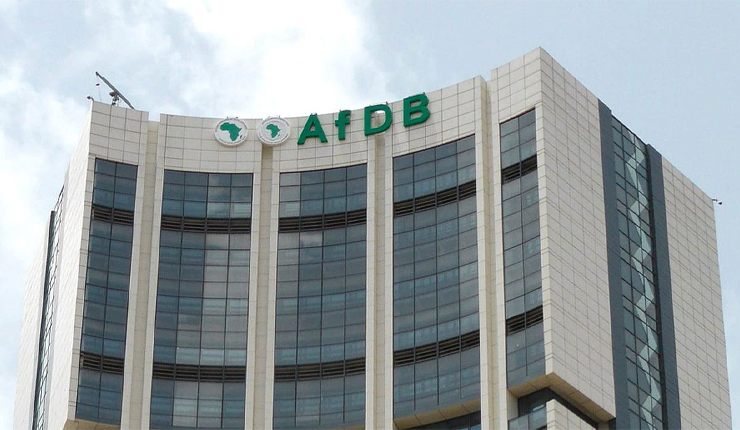

Rabat – Morocco’s reform drive earns strong recognition in the latest report from the African Development Bank (AfDB), which describes the country’s governance support program as “very satisfactory” in its May 2026 review.
The assessment places Morocco among the few economies in the region that sustain reform momentum despite a tense global climate.
At the core of this trajectory stands the Economic Governance and Climate Resilience Support Program (PGRCC-II), financed with €186 million and fully executed. For the bank’s analysts, the result goes beyond technical success to reflect a broader shift in how public policy operates, with faster implementation and clearer outcomes.
One of the most visible changes concerns public enterprises. For years, this sector has carried a reputation for complexity. That perception has begun to change under the supervision of the National Agency for the Strategic Management of State Holdings (ANGSPE). In 2025, transfers from public entities to the state budget reached MAD 20.6 billion ($2.2 billion), far above initial expectations.
Behind that figure stands a deliberate effort to simplify structures and clarify roles. The number of public entities fell slightly, yet the more decisive step came from legal and managerial reform.
The National Office of Hydrocarbons and Mines (ONHYM) and the National Ports Agency (ANP) now operate as joint-stock companies, a shift that signals a different approach to governance. At the same time, dozens of institutions now benefit from lighter state oversight, a sign that trust in internal management has grown.
Investment trends point in the same direction. Foreign direct investment reached MAD 56 billion ($6.1 billion) in 2025, well above the target set at the start of the program. Industry and renewable energy continue to attract the largest flows, as Morocco builds its position as a production and energy platform.
The investment charter introduced in recent years is beginning to show concrete effects. By the end of 2025, nearly 250 projects received approval, with MAD 414 million ($45.5 millon) in committed investment. Economists also note progress in capital efficiency. Each unit of investment now generates more growth than before, a signal that resources are being used more productively.
Energy policy tells a similar story of acceleration. Renewable sources now account for 45% of installed capacity, or 5.4 gigawatts. Authorities now expect the 52% target to be reached by 2027, ahead of the initial schedule. This progress has already reduced energy dependence, which has declined steadily over the past decade.
International rankings confirm this direction. Morocco now holds sixth place in the Climate Change Performance Index (CCPI), a position that reflects sustained effort in energy transition.
The report, however, does not overlook risks. Trade ties remain heavily oriented toward Europe, which absorbs more than half of Moroccan exports. Any slowdown in that market could affect growth. Tensions in the Middle East also raise questions about future energy costs.
Even so, the broader picture remains stable. A strong agricultural season in 2025-2026 supports domestic activity, while a $5 billion flexible credit line from the International Monetary Fund (IMF) provides financial security in the event of external shocks.
For the AfDB, Morocco’s recent path shows how steady reform, when paired with clear priorities, can deliver measurable results. The challenge now lies in maintaining that pace while navigating an uncertain global environment.