African Trade and Economic Outlook 2026 - Moving up the ladder: Capturing more value from Africa’s commodities
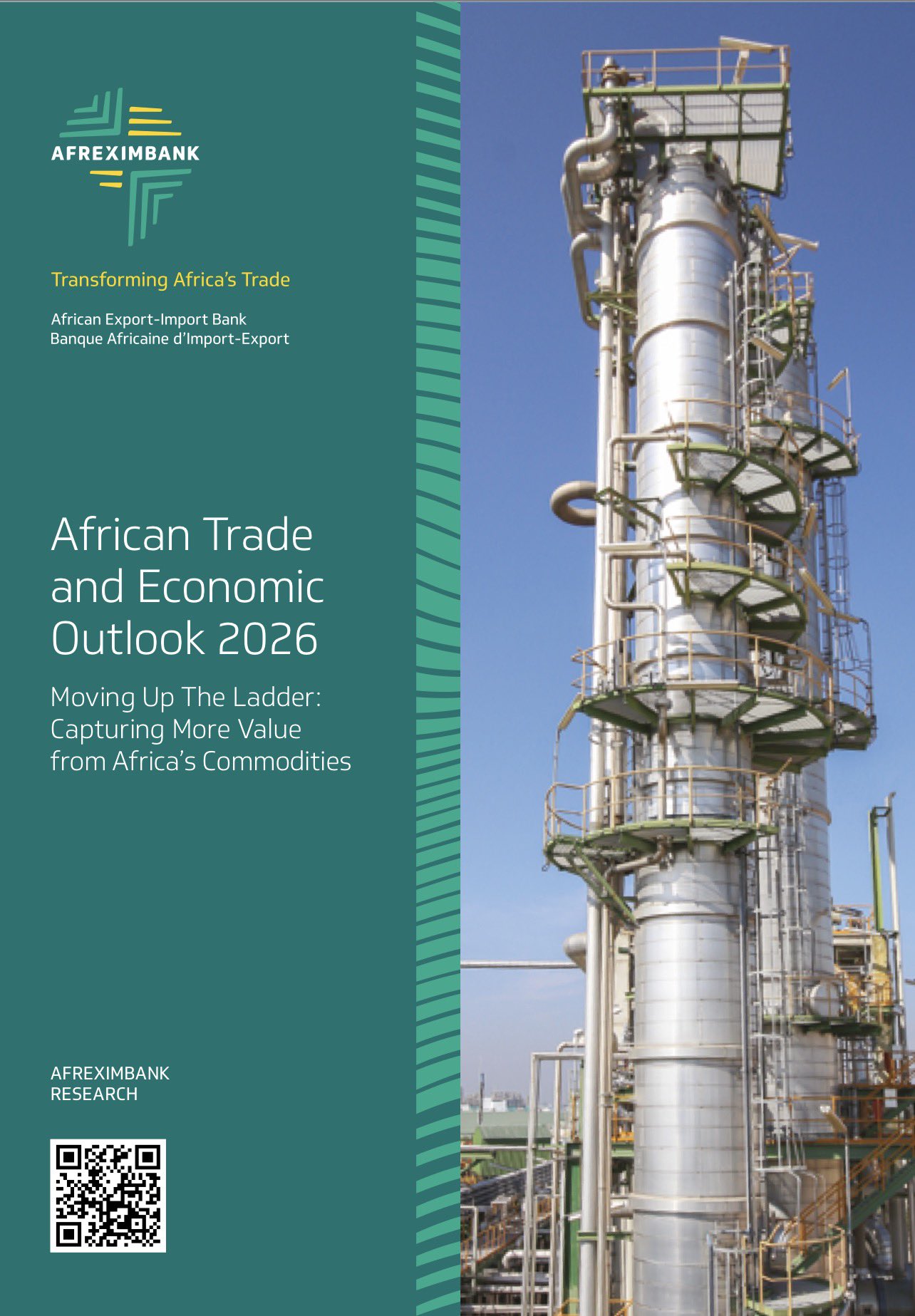

Afreximbank Research is pleased to announce the release of the African Trade and Economic Outlook 2026 with the theme ‘Moving up the Ladder: Capturing More Value from African Commodities’ which presents a timely and authoritative analysis of Africa’s evolving economic landscape amid shifting global dynamics.
This year’s theme is anchored on the need for advancing Africa’s integration into global value chains while strengthening intra-African trade and industrialization — a strategic direction that aligns closely with Afreximbank’s priorities over the next five years to deepen economic resilience, accelerate structural transformation, and reposition Africa within the global economy.
The report underscores Africa’s resilience in a complex global environment marked by geopolitical tensions, tightening financial conditions, and fragmented trade systems. Despite these headwinds, the continent continues to demonstrate steady growth, with real GDP projected to hover around 4% in the medium term, reinforcing Africa’s position as one of the fastest-growing regions globally.
A central message is the rising importance of intra-African trade as a stabilizing force. With the African Continental Free Trade Area (AfCFTA) gaining traction, intra-African trade is expected to expand significantly, driven by regional integration, new value chains, and policy reforms aimed at reducing trade barriers—highlighting the transformative potential of deeper economic integration.
Insights from Chapter Two further deepen this narrative by examining the structure and direction of Africa’s trade flows.
The report highlights how commodity dependence continues to shape export profiles, leaving many economies exposed to price volatility. However, it also points to emerging diversification trends, particularly in manufactured goods and services, alongside growing participation in regional and South-South trade corridors. Importantly, the chapter underscores the need to strengthen value addition, improve trade logistics, and address non-tariff barriers, which remain significant constraints to competitiveness and export expansion. The report also highlights a gradual reconfiguration of Africa’s trade partnerships.
While traditional partners such as Europe and the United States remain important, Africa is increasingly strengthening ties with emerging partners in Asia and the Middle East—reflecting a broader global realignment and creating new opportunities for diversification and investment. Macroeconomic risks remain a key concern.
Elevated debt levels, inflationary pressures, currency volatility, and constrained access to affordable financing continue to pose challenges, compounded by global uncertainties. However, clear pathways for resilience emerge: strengthening regional value chains, investing in trade-enabling infrastructure, accelerating digital transformation, and scaling innovative financing solutions. Initiatives such as the Pan-African Payments and Settlement System (PAPSS) are critical to reducing transaction costs and facilitating seamless cross-border trade.
Ultimately, the African Trade and Economic Outlook 2026 presents a compelling narrative: Africa is not only navigating global uncertainty but actively reshaping its economic future. With the right policy choices and sustained collaboration, the continent is well-positioned to unlock new growth frontiers and play a more prominent role in the global economy.
Read the full report here: https://research.knowledge.afreximbank.com/do/10.5555/867689c9-0601-41c2-93fa-17920201d280/full/media/african_trade_and_economic_outlook_2026.pdf