Africa’s Payments Revolution Takes Centre Stage in Addis Ababa
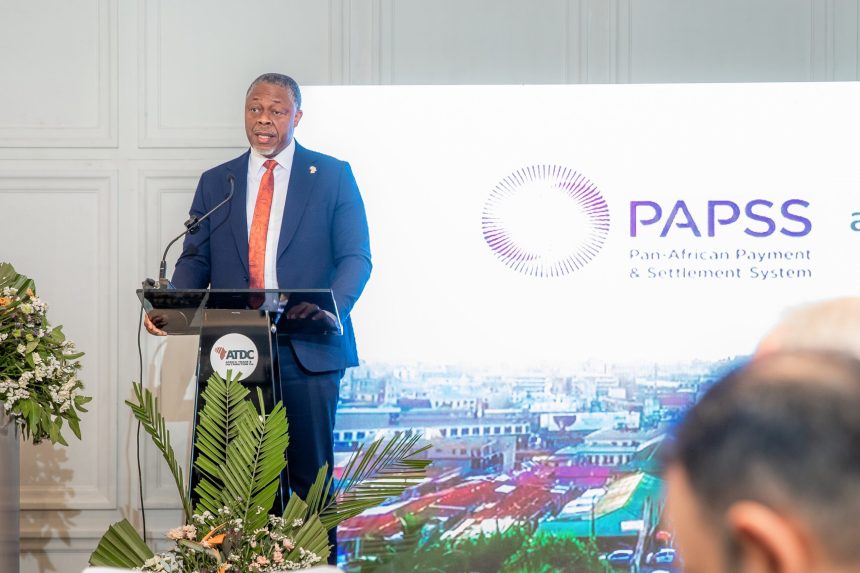

African central bankers, financial sector executives, policymakers and technology innovators are converging on Addis Ababa, Ethiopia, for the second edition of PAPSS COWRY, as Africa intensifies efforts to dismantle cross-border payment barriers, deepen financial integration and unlock the potential of intra-African trade.
Scheduled for November 26–27, 2026, the conference is jointly organized by the Pan-African Payment and Settlement System (PAPSS) and the National Bank of Ethiopia. Following the inaugural edition in Lagos, Nigeria, the Addis Ababa gathering comes at a time of growing demand for African-owned financial infrastructure to support trade, investment and economic integration.
Taking place at the Ethiopian Skylight Hotel, the conference is expected to attract more than 1,000 delegates, over 60 speakers and more than 35 exhibitors. Under the theme “Scaling Africa’s Sovereign Payments: From Continental Connectivity to Global Integration,” discussions will focus on increasing transaction volumes, expanding the use of African currencies and strengthening the continent’s participation in global commerce.
From Continental Connectivity to Commercial Adoption
Developed by the African Export-Import Bank (Afreximbank) in collaboration with the African Continental Free Trade Area (AfCFTA) Secretariat, PAPSS was officially launched in Accra, Ghana, in January 2022. Its establishment followed its adoption by African Union heads of state in 2019 as an instrument for advancing continental economic integration.
Four years after its commercial launch, PAPSS has extended its reach to more than 30 countries, connecting 24 central banks, 16 national payment switches and over 200 commercial banks and fintech companies. The expansion marks considerable progress in addressing the fragmented payment infrastructure that has historically complicated commercial transactions between African countries.
For decades, African businesses trading with counterparts elsewhere on the continent have relied on intermediary banks outside Africa, often converting domestic currencies into dollars or euros to complete transactions. The process has increased operating costs, exposed businesses to exchange rate volatility and placed additional pressure on countries facing foreign currency shortages.
PAPSS offers an alternative by enabling customers to initiate payments in their domestic currencies while beneficiaries receive funds in theirs. Transactions through its instant payment infrastructure can be processed within 120 seconds, with services available around the clock.
For small and medium-sized enterprises, manufacturers, exporters and service providers, wider adoption could improve access to regional markets, strengthen supply chains and reduce the cost of doing business across African borders.
Ethiopia’s Growing Role in Africa’s Financial Integration
The choice of Addis Ababa as the venue for PAPSS COWRY 2026 is particularly significant following the National Bank of Ethiopia’s entry into the continental payments network in October 2026. The development comes as Ethiopia pursues financial sector reforms and seeks stronger commercial ties with other African economies.
As the headquarters of the African Union, Addis Ababa has long been central to discussions on continental integration. Hosting PAPSS COWRY brings the institutions responsible for implementing Africa’s economic ambitions together with the businesses and financial service providers whose participation will determine their success.
Another significant development in 2026 was the admission of the Bank of Central African States (BEAC) into PAPSS, opening the way for deeper integration of the six countries of the Central African Economic and Monetary Community (CEMAC): Cameroon, Chad, Gabon, Equatorial Guinea, the Central African Republic and the Republic of Congo.
PAPSS is working with BEAC to integrate financial institutions across the region and make its services accessible to businesses and individuals. The development could address some of the longstanding difficulties associated with commercial transactions between Central Africa and other parts of the continent.
Tackling Africa’s $5 Billion Currency Bottleneck
Beyond facilitating cross-border payments, PAPSS is expanding its operations to address currency convertibility, capital repatriation and retail payment challenges. In June 2025, PAPSS and African technology company Interstellar unveiled the PAPSS African Currency Marketplace (PACM) during the Afreximbank Annual Meetings in Abuja, Nigeria.
Currency fragmentation and dependence on external currencies have been identified as a $5 billion annual bottleneck to African trade. Limited currency convertibility has also created difficulties for airlines, insurance companies and multinational corporations seeking to repatriate earnings or finance regional operations.
“By creating a single, continent-wide liquidity pool, PACM serves as a powerful liquidity engine for intra-African commerce,” PAPSS Chief Executive Officer Mike Ogbalu III said at the launch of the marketplace in 2025.
The marketplace facilitates direct exchanges between African currencies, offering eligible businesses and financial institutions an alternative to conventional foreign exchange arrangements. More than 80 African companies were onboarded during its pilot phase, reflecting private sector interest in alternative currency exchange mechanisms.
PAPSS also expanded into retail payments with the launch of PAPSSCARD in June 2025. Developed through a partnership involving Afreximbank, PAPSS and Mercury Payment Services, the initiative seeks to strengthen African ownership of card payment infrastructure, improve affordability and retain greater control over transaction data.
The introduction of these services broadens the mandate of PAPSS beyond bank-to-bank transactions, positioning the institution to serve a wider range of consumers, businesses and financial institutions.
African Fintechs Look Beyond Continental Borders
The Addis Ababa conference will examine local-currency settlement, commercial adoption of existing payment networks, integration with international markets and emerging financial technologies, including stablecoins, central bank digital currencies and tokenized assets.
African fintech companies will feature prominently in the discussions as they seek to expand internationally, attract investment and develop services capable of operating across multiple regulatory jurisdictions.
A flagship panel on November 27, titled “African Fintechs Without Borders – Scaling Payments Beyond the Continent,” will feature Tsegaye Emmanuel, Deputy CEO of Technology at Ethio telecom; Dare Okoudjou, Founder and CEO of Onafriq; Wole Ayodele, CEO of Fincra; Morounke O., Global CFO of Flutterwave; and Lasbery C. Oludimu, Group Vice President of Yellow Card.
The session will be moderated by Zekarias D. Amsalu, Founding Managing Partner of Next Roots Ventures and Co-Founder of the Africa Fintech Summit. Several delegates from the recent Africa Fintech Summit in Kigali, Rwanda, are also expected to participate in the Addis Ababa gathering.
With African fintech companies expanding their operations beyond their home markets, access to reliable payment infrastructure, regulatory cooperation and strategic partnerships will be critical to their ability to compete internationally.
Building on the Success of Lagos
The inaugural PAPSS COWRY conference, held in Lagos in December 2025, attracted more than 600 participants from 25 countries, establishing a platform for engagement between regulators, financial institutions, technology companies and other stakeholders in Africa’s payments industry.
The anticipated participation of more than 1,000 delegates in Addis Ababa reflects growing interest in the continental payments agenda. The conference will feature exhibitions, bilateral meetings, workshops, business networking and opportunities for new commercial partnerships.
The PAPSS COWRY Awards Gala Dinner, scheduled for November 26, will recognize institutions making notable contributions to payment innovation, financial integration and the adoption of continental payment infrastructure.
The conference takes its name from the cowry shell, which served as a medium of exchange across several African societies for centuries. Its adoption as the symbol of the gathering carries historical significance as Africa seeks greater ownership of the financial infrastructure through which its commercial transactions are conducted.
Making the African Single Market Work
For Africa, the significance of PAPSS extends well beyond the financial services industry. Efficient cross-border payments could strengthen manufacturing, agriculture, tourism, logistics, telecommunications and other sectors that stand to benefit from the creation of a more integrated continental market.
Considerable challenges remain, including regulatory differences, currency liquidity constraints, uneven technological infrastructure and limited awareness among businesses. Connecting financial institutions is an important achievement, but competitive pricing, accessibility and sustained commercial usage will determine the long-term success of the system.
Under the leadership of Chief Executive Officer Mike Ogbalu III and Deputy Chief Executive Officer Bosco Sebabi, PAPSS has made considerable progress in expanding its network and diversifying its services. The next phase will require greater participation from commercial banks, fintech companies, governments and businesses across the continent.
The ultimate measure of success will be how easily a Ghanaian manufacturer can pay a supplier in Kenya, a Cameroonian entrepreneur can access customers in Rwanda, or an Ethiopian business can expand into Nigeria. For the AfCFTA to deliver on its promise, African businesses must be able to trade with one another without the financial barriers that have for decades constrained commerce across the continent. That is the challenge confronting delegates in Addis Ababa.