Egypt’s SCZone revenue jumps 37% to record $314m in FY2025/26
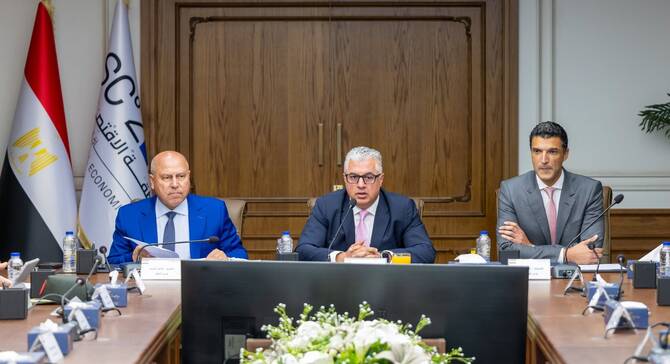

Egypt’s Suez Canal Economic Zone generated a record 15.9 billion Egyptian pounds ($314 million) in revenue during fiscal year 2025/26, up 37 percent from a year earlier and 51 percent above budget.
Dollar-denominated revenue rose 44 percent year on year to $246 million, accounting for 76 percent of total revenue, while income generated in local currency increased 21 percent to 3.8 billion pounds, representing the remaining 24 percent, the General Authority for the Suez Canal Economic Zone said in a statement.
The record performance comes as the SCZone continues to strengthen its position as a regional industrial and logistics hub under Egypt’s broader economic development strategy.
In an official post on Facebook, the authority said: “The fiscal year 2025/2026 witnessed a significant shift in the authority’s revenue structure, with the contribution of other activities and industrial zones, excluding ports, rising to 19 percent of total revenues, compared to a previous average of 8 percent.”
It added: “This increase was driven by a growth rate exceeding that of port revenues, which accounted for 81 percent of total revenues, down from 92 percent previously. This reflects the success of the authority’s efforts to diversify its revenue streams.”
A decade of growth
The figures were announced during the first meeting of the SCZone’s board of directors for the 2026/27 fiscal year. During the meeting, the board reviewed the authority’s development since its establishment, noting that annual revenue had increased from 2.8 billion pounds in FY2016/17 to 15.9 billion pounds in FY2025/26, reflecting a sustained growth trajectory.
In May, Chairman Walid Gamal El-Din said the authority had attracted around $16 billion in investments over the previous three years and nine months, including $7.1 billion during the current fiscal year, supported by expanding industrial zones, port infrastructure and logistics services.
Gamal El-Din added at the time that the authority expects revenue and budget surplus to grow by more than 30 percent during the current fiscal year, driven by new factories entering operation, increased port activity, and continued investment in priority sectors including renewable energy, pharmaceuticals, chemicals, metals, and electric vehicles.
Over the past decade, the authority has increased its annual revenue nearly sixfold. Cargo handled across its ports, including both containerized and non-containerized shipments, also more than doubled, rising from 51.2 million tonnes in fiscal year 2016/17 to 108.7 million tonnes in 2025/26, an increase of more than 112 percent.
“This growth is a result of port development efforts, including the expansion of berths and terminals, and attracting major international port operators,” the authority stated.
It added: “These factors have contributed to increased handling capacity and improved operational efficiency. Furthermore, the authority has successfully attracted diverse investments to its industrial zones, reinforcing its role as a regional hub for industry and logistics.”
Investment pipeline expands
During the meeting, Gamal El-Din reviewed the authority’s promotional efforts during the 2025/2026 fiscal year. The authority attracted 117 new projects contracted in industrial zones, with investments totaling $7.26 billion.
Once completed, the projects are expected to create approximately 73,500 direct jobs across a total area of 8.7 million sq. meters.
This brings the total land area allocated for investment projects within industrial zones over the past four years to 21.3 million sq. meters, encompassing 398 undertakings in industrial zones and 14 in seaports.