Ethiopia and Nigeria Seal Gas-by-Rail Pact for Transcontinental Freight Corridor
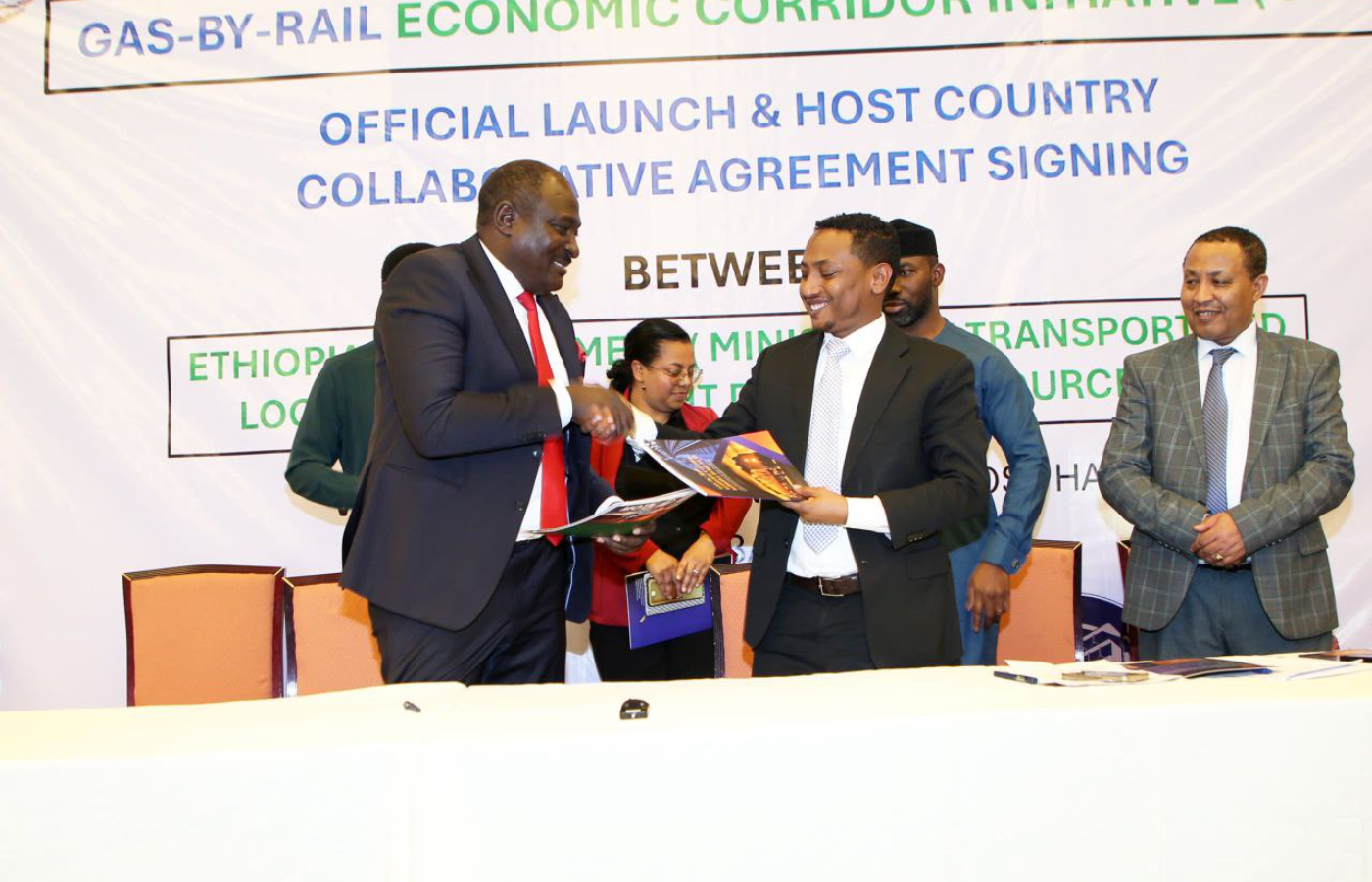

Ethiopia and Nigeria, Africa’s two most populous countries, have launched a Gas-by-Rail Economic Corridor partnership through Ethiopia’s Ministry of Transport and Logistics and Nigeria’s Insight Dynamic Resources. The private-sector initiative, led by IDR and a consortium of partners, aims to build a 73,500-kilometre freight railway connecting 40 Sub-Saharan African countries, with Ethiopia serving as the host nation.
The project includes plans to deploy as many as 470 high-efficiency gas turbines to form a 270-gigawatt baseload power system across the continent. To supply these turbines, partners intend to establish a virtual pipeline capable of transporting 100 million tonnes of hydrogen fuel annually. Project documents indicate the initiative could create more than 70 million jobs by 2050.
Meeting the operational scale will require a logistics fleet projected at 5,100 heavy-haul locomotives, nearly 80,000 specialised tank units and 100,000 wagons and coaches. “But hardware alone is not enough. A fleet of this magnitude requires a nervous system,” said Musa Ibrahim, founder of the Gas-by-Rail initiative and project development
Siemens Mobility has been selected to provide that digital architecture through the Siemens Xcelerator platform, which uses artificial intelligence and digital-twin technology to monitor infrastructure conditions and optimise network capacity in real time. The system is designed to support more than two billion users under a coordinated smart-rail framework.
Musa told Birrmetrics the cost of the programme is expected to fall between five hundred million and 1 trillion US dollars.
Bareo Hassen, state minister of transport and logistics, said Ethiopia has 5,000 kilometres of designed railway routes with potential links to regional ports, though only 902 kilometres remain operational. He said private investment is essential to close this gap and that the partnership is aligned with efforts to enhance connectivity under the African Continental Free Trade Area. According to Bareo, the scheme could provide access to more than 1,000 kilometres of rail infrastructure across 40 states and contribute to reduced deforestation.
The initiative is structured around three core components: an industrial programme featuring a green steel complex developed with SMS Group to enable self-sufficient rail-track production; a digital backbone in partnership with Siemens Mobility to establish the One Africa Network through blockchain-based freight systems; and a decarbonisation plan with Wabtec Corporation involving FLXdrive battery-electric locomotives aimed at supporting clean-energy logistics and limiting reliance on woodfuel.