The European Union (EU) has extended its strategic partnership roadmap with Namibia to 2030 and announced new investments focused on renewable energy, critical raw materials and industrial development.
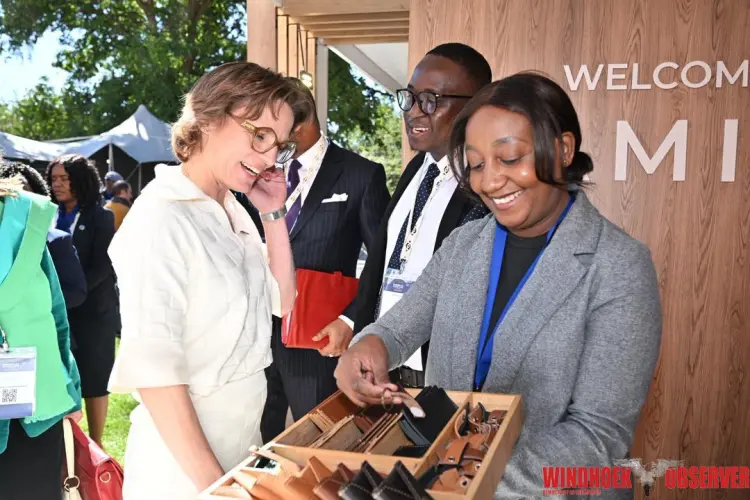
The announcement was made during the second Namibia–EU Business Forum held in Windhoek on Tuesday.
Bilateral trade between Namibia and the EU reached N$17.6 billion in 2025, supporting sectors such as agriculture, fisheries, charcoal, beef processing, table grapes and locally processed minerals.
The EU said Namibia’s exports to European markets support more than 46 000 jobs across the country.
EU commissioner for environment, water resilience and a competitive circular economy Jessika Roswall said the partnership comes at a time when climate change, resource shortages and trade tensions are affecting global markets.
She said “close collaboration built on trust and equality” remains important for building stable and sustainable economies.
Roswall announced that the EU and the Namibian government agreed to extend the strategic partnership roadmap, which was launched in 2023 by EU president Ursula von der Leyen and former Namibian president Hage Geingob.
The partnership focuses on renewable hydrogen and critical raw material value chains, with the EU aiming to support Namibia’s industrialisation through investment, technology transfer and market access.
The EU also announced a new €4 million project, valued at about N$78 million, in partnership with the Geological Survey of Finland and Andrada Uis Mine.
The project will focus on lithium extraction for global battery supply chains.
Roswall said the project marks a move from pilot projects to large-scale industrial development that could create jobs, develop skills and support local businesses.
She said Africa’s role in global value chains is changing as countries move towards more local value addition instead of only exporting raw materials.
Roswall also highlighted opportunities in automotive components, agribusiness and creative industries, saying Namibia has the potential to increase exports to European markets.
She described the EU-Namibia partnership as “stronger than ever” and called on stakeholders to turn the cooperation into economic and social benefits.
The EU remains Africa’s largest trading and investment partner, with annual trade exceeding €350 billion and more than €300 billion invested across the continent.