FAO: Strait of Hormuz Crisis Threatens Food Supplies Across Gulf States

Agadir – The “Global Agrifood Implications of the 2026 Conflict in the Middle East” report by the Food and Agriculture Organization of the United Nations (FAO) indicates that the recent disruption in the Strait of Hormuz has created a ripple effect, affecting food security in the region.
According to the report, the raging conflict in the Persian Gulf region has already created generational ripples in the global energy and food sectors. The region is vulnerable to disruptions in the oil and food supply chains.
Impact of energy disruption on food availability
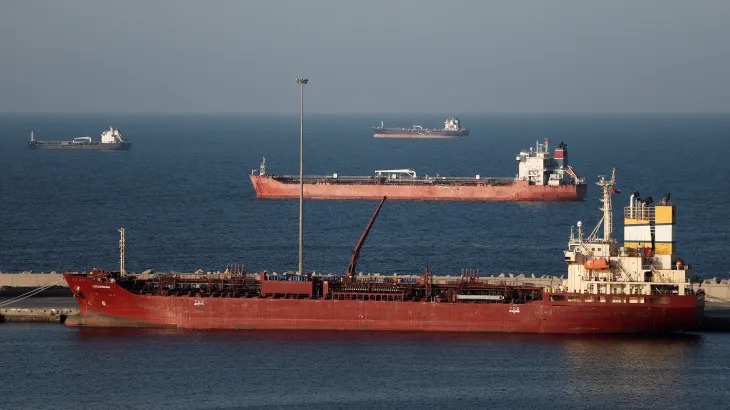
The FAO report explained that trade via the Strait of Hormuz, the key maritime route connecting energy-producing countries in the region to global markets, has come to a halt.
The region, comprising countries such as Saudi Arabia, United Arab Emirates, Kuwait, Qatar, Iraq, and Iran, produces over 25% of the world’s oil and a substantial portion of the global liquefied natural gas (LNG) trade.
The Strait of Hormuz usually transports 20 million barrels of crude oil and oil products every day, representing 25% of the world’s oil transported via maritime routes.
Within days of the conflict, FAO said that tanker traffic via Hormuz decreased by over 90%, and gulf producers were forced to shut in 10 million barrels per day of oil by March 10.
Saudi Arabia and the UAE are the only two that can partially bypass the strait via pipeline. All other countries are almost completely dependent on the strait.
Such energy price shocks are not only responsible for price increases in global markets, notes the FAO report, stressing that they also have a direct impact on fertilizer availability and agricultural production, thereby directly impacting global food security.
Heavy reliance on imported food
The FAO report emphasizes that despite their oil wealth, the gulf states remain highly vulnerable in the food sphere, depending on food imports for 70-90% of the basic food basket.
They are heavy importers of cereals such as wheat and rice, with per capita wheat consumption exceeding 100 kg annually in some of the gulf states. The closure of the Hormuz Strait threatens to cut off the supplies of wheat, rice, sugar, vegetable oil, and other basic foods to the gulf states, with more than 50 million people.
Alternative routes, such as the ports in the Red Sea in Saudi Arabia or via land routes through Turkey and Iran, are hindered by capacity limitations and insecurity in the region.
The FAO report indicates that, despite emergency interventions such as air cargo services and the use of strategic stocks, these emergency interventions are not enough to replace the usual volumes.
The gulf countries, especially Qatar, are at the highest risk of facing shortages because of the absence of alternative ports.
Regional threats on food security
The war has also prompted Iran to ban the export of all food items, effective from March 3. This has impacted the surrounding countries, including Iraq and Afghanistan, which rely on Iranian wheat, dairy products, and fruits.
Other regional economies that are vulnerable to the crisis as the FAO mentioned, including Lebanon, where the recent Integrated Food Security Phase Classification (IPC) analysis shows that around 874,000 people, about 17% are classified as having Crisis or Emergency levels of food insecurity. According to the report, the situation may worsen in the coming April-July 2026 to rise to nearly 961,000 people.
In Yemen, 17 million people are already experiencing high levels of acute food insecurity, bordering on catastrophic levels. IPC showed that millions of households are struggling to meet basic dietary needs, “unless there are dramatic improvements in supply and assistance.”