Jibar gets five-month reprieve as legal fix for legacy contracts remains unfinished
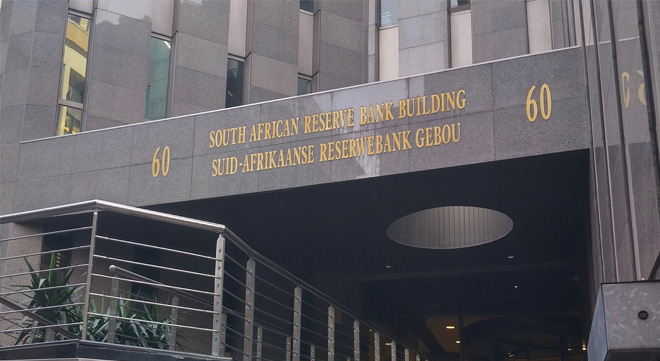

The South African Reserve Bank has pushed back Jibar’s final publication date by five months, warning that switching off the benchmark before a legal framework is in place for difficult-to-amend contracts could disrupt financial markets.
All Jibar tenors will now cease to be published after 31 May 2027, rather than 31 December 2026, Deputy Governor Rashad Cassim announced on Tuesday at the 2026 Market Practitioners Group Conference.
The delay gives the legislative process more time to address “tough legacy contracts” that cannot readily be amended or do not contain workable fallback provisions. Proposed amendments to the Financial Sector Regulation Act would allow the SARB to designate replacement benchmarks for these contracts, but the amendments are not yet law and still require parliamentary approval and presidential assent.
“We have therefore decided it is too risky to continue with the previously announced Jibar cessation date,” Cassim said. He warned that ending Jibar without a legal mechanism for these contracts “could be highly disruptive”.
A delay, not a change of direction
The SARB first announced the 31 December 2026 cessation date in December 2025, with market participants expected to move from Jibar to the South African Rand Overnight Index Average (ZARONIA).
Cassim said the extension reflects uncertainty over whether the legislation and the steps needed to implement it would be completed in time. It also gives major clearing houses time to schedule the conversion of outstanding Jibar-linked derivatives to ZARONIA. If the conversion does not align with Jibar’s cessation, different parts of the market could transition at different times, creating “basis, valuation, hedging and operational risks”.
The SARB does not expect the extension to create major new transition costs. Cassim said the additional time would give market participants breathing space to complete outstanding contractual, systems and operational work.
The delay does not reverse the reform programme. All Jibar tenors will stop being published after 31 May 2027, and ZARONIA remains the preferred successor.
The legacy-contract problem
The transition has been under way since 2018. Jibar is based on quotes from a panel of banks, while ZARONIA is calculated from actual overnight wholesale deposit transactions. By September, ZARONIA-linked derivative exposures had exceeded R18.5 trillion globally, while Jibar-linked derivative exposures still topped R98 trillion.
The proposed legislation has encountered a setback. On 17 September, the Constitutional Court declared the Public Procurement Act invalid. Because the General Finance Laws Amendment Bill also sought to amend that Act, Parliament’s Standing Committee on Finance paused consideration of the Bill while it considered how to proceed.
Read: Parliament hits pause on urgent JIBAR transition Bill
Legal advisers subsequently recommended removing the procurement provisions and proceeding with the proposed amendments to the Financial Sector Regulation Act. The Committee had not adopted that route by 15 October.
Read: Legal advisers map route forward for JIBAR transition Bill
Term ZARONIA and the next steps
The SARB and the Market Practitioners Group will continue work on the transition framework, including Term ZARONIA.
FTSE Russell, a global provider of financial market indices and data owned by the London Stock Exchange Group, was appointed administrator of the forward-looking rate in April 2026. Based on activity in the ZARONIA overnight index swap market, Term ZARONIA is intended for specific uses that the SARB will define.
The SARB plans to use Term ZARONIA to determine Synthetic Jibar, a temporary fallback for a limited group of existing contracts that cannot readily move to ZARONIA and need a forward-looking term rate. It is not intended for new business or as a continuation of Jibar for the wider market. Contracts with effective fallback provisions are expected to transition under their existing terms.
Cassim said the delay would give the legal and operational work more time to catch up. He likened the transition to “renovating a house while the family are still living in it”.
“As anyone who has done a renovation knows, there are often problems and delays. Timelines move. And that is where we are now,” he said.