Safaricom Launches 15th Sustainability Report in Nairobi
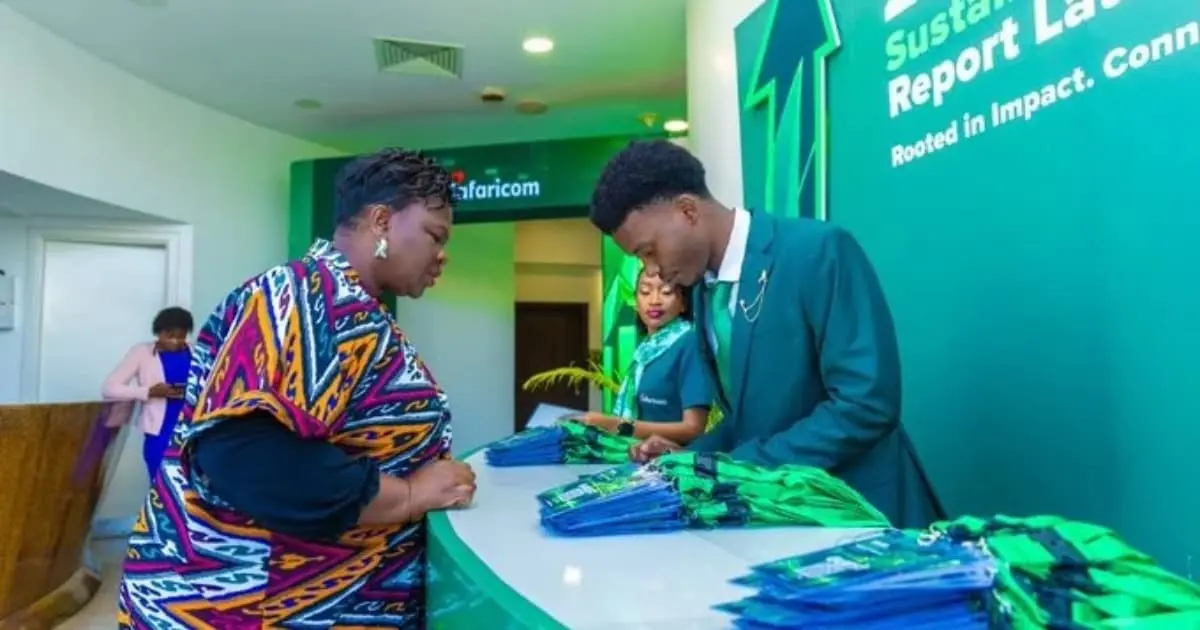

Kenya ,October 27, 2026 - Safaricom released its 15th Sustainable Business Report on Tuesday at the Michael Joseph Centre in Nairobi. The report looks at the company’s work from April 2025 to March 2026.
For the first time, Safaricom used a new way of checking its impact called double materiality. This means the company now looks at two things at the same time: how its work affects people and the environment, and how environmental and social problems affect Safaricom’s own business.
The company also changed how it measures its impact. For about ten years it used a system called True Value. Now it is using a different system called the Value Balancing Alliance. Company leaders say the new system is clearer and makes it easier to compare Safaricom with other companies.
According to the report, Safaricom’s activities created KSh 1.24 trillion in value for Kenya last year. That is 10 percent more than the year before. Of this amount, KSh 654 billion came directly from the company’s own business. The wider network of agents, dealers and partners helped support more than 1.4 million jobs, including 70,000 new jobs created during the year.
On the environment side, Safaricom grew about 681,000 trees. This brings the total number of trees to three million. The company wants to reach five million trees by 2030. It also added 570 new solar-powered mobile sites, bringing the total to 2,002. The long-term goal is 5,000 solar sites. About 35.7 percent of the network now runs on green energy.
However, the report also shows that Safaricom’s own carbon emissions went up during the year. The company recorded one work-related death as well. Chief Executive Peter Ndegwa said these are areas where the company must do better.
Women now hold about 44 percent of leadership positions, up from 24 percent when Ndegwa joined the company. The target is 50 percent by 2030. Women already make up nearly half of all Safaricom workers. Spending with businesses owned by women is still low at around 5 percent, and the company wants to raise this to 10 percent.
Safaricom also raised KSh 20 billion through its first green bond. The bond was very popular and received applications worth KSh 41.4 billion. Most of the money came from ordinary Kenyans. The funds will be used to expand 5G networks, put more solar power on mobile towers, and replace old equipment.
The company is also exploring a new platform where communities and businesses could sell carbon credits and receive payments through M-Pesa. Safaricom has said it will not start trading carbon credits itself in the near future. It wants clear government rules first.
Karen Basiye, Safaricom’s Director of Sustainable Business, described sustainability as a business necessity rather than just charity. She has called it “the roof of Safaricom.”