State stakes in Chinese-backed African mineral projects run from 5% to a possible 25%, report finds, with no published technology-transfer terms
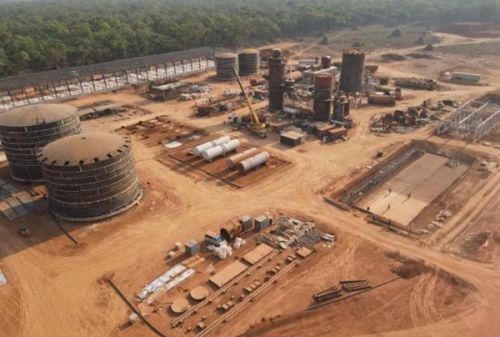

African governments hold stakes ranging from 5% in the Kisanfu copper project in the Democratic Republic of Congo to a potential 25% in Mali's Goulamina lithium project, according to a report released in October by Development Reimagined. Across the 32 Chinese-backed mineral projects it tracked, the consultancy found no published evidence of joint research, licensing agreements or local appointments to senior technical and management positions.
The consultancy tracked projects announced, signed, built, acquired or completed in 15 countries between the ninth Forum on China-Africa Cooperation in September 2024 and June 2026. The 32 projects span 16 minerals and metals and are worth a combined $41.2 billion. Nineteen involve processing or manufacturing and are worth $16.3 billion. They represent 59% of the projects but 40% of the total investment value. Greenfield projects account for 87% of the total value.
Simandou, the $23 billion iron ore project in Guinea involving Baowu's Winning Consortium Simandou, Chinalco and Rio Tinto, accounts for 56% of the total. The project includes more than 600 kilometers of railway, along with port facilities. Excluding Simandou, the remaining 31 projects are worth $18.2 billion, with processing accounting for about 90% of that amount (our calculation). Under Simandou's co-development agreement, the partners must submit feasibility studies for either a 500,000-metric-ton steel mill or a 2-million-metric-ton pellet plant within two years of production starting.
Kisanfu Gives the DRC 5%, Goulamina Gives Mali Up to 25%
China Molybdenum's $1.1 billion Kisanfu expansion is expected to add 100,000 metric tons of copper production annually from 2027. China Molybdenum holds 71.25%, battery maker CATL 23.75% and the Congolese government 5%. According to the report, the state's financial returns are limited to royalties and a minority share of dividends.
Elsewhere, Tanzania retained at least a 16% free carried interest and a 3% royalty in Peak Rare Earths, while Mali secured 10% of Goulamina with an option to increase its stake to 25%. Nigeria holds 15% of the Aluminium Smelter Company of Nigeria and Zambia 20% of the Luanshya copper mine. In Uganda, the investor holds the larger share of a $250 million gold mine. The difference between the DRC's 5% and Mali's 25% reflects national legislation more than project value, the authors write.
Nigeria's smelter, which has an annual capacity of 300,000 metric tons of aluminum, has been idle for more than a decade because of unreliable power supplies, legal disputes and financial problems. China National Chemical Engineering signed a $1.2 billion contract to overhaul the gas plant linked to the facility. In Zambia, China Nonferrous Mining and state-owned ZCCM have invested more than $75 million at Luanshya and plan to spend about $710 million redeveloping Shaft 28.
Zimbabwe has gone furthest in requiring local processing. It suspended exports of raw minerals and lithium concentrate in February 2026. Sinomine has announced a $400 million lithium smelter, Sichuan Yahua is building a $200 million lithium sulfate plant at Kamativi with a subsidiary of the state's Mutapa Investment Fund, and Huayou Cobalt reported its first lithium salt exports in April 2026. Lithium sulfate sells for $8,000 to $15,000 per metric ton, while lithium carbonate sells for about $21,000. Tsingshan's $800 million blast furnace at the Dinson steel plant would double annual capacity to about 1.2 million metric tons, while Zimbabwe imports about $1 billion worth of steel a year.
Jobs and Equity Are on Record, Engineering Capability Is Not
The documented commitments concern jobs and ownership. They include about 300 jobs at Erkang's lithium plant in Nigeria and about 4,000 at South Africa's Orkney gold plant. The latter was refurbished for $11 million before gold prices rose 52% between November 2024 and June 2026. They also include a requirement that at least 60% of non-managerial positions at Peak Rare Earths go to Tanzanians, as well as joint ventures with state-owned partners at Kamativi and Luanshya. Equity stakes generate dividend income, while governments also collect royalties, but ownership alone does not transfer technical expertise, the report says. Many projects are recent, and technical terms are rarely disclosed, so the absence of published evidence does not mean that no technology transfer is taking place.
Geological data is another gap. In the DRC, global surveys document production of at least nine green minerals, but reserve estimates are available for only three. Mozambique has produced at least eight green or critical minerals, but public reserve data exists only for graphite and zirconium. A China-funded survey in Liberia, the country's largest in 50 years, identified cobalt, lithium, neodymium, nickel, silver, uranium and zinc. The DRC has also agreed to share geological data with China. Zimbabwe's memorandum with Greypole-Tianci includes no provision for state participation or data sharing.
The report recommends that African governments establish minimum state ownership requirements, agree on ownership and revenue-sharing terms before projects begin, and tie export permits to local processing. It also calls on Chinese investors to disclose the terms of their investments.
Development Reimagined recommends that African governments agree on common positions ahead of the tenth Forum on China-Africa Cooperation, expected in 2027.