Zimbabwe Holds Rate at 35%, Even as ZiG Inflation Dips to 19.0% in November
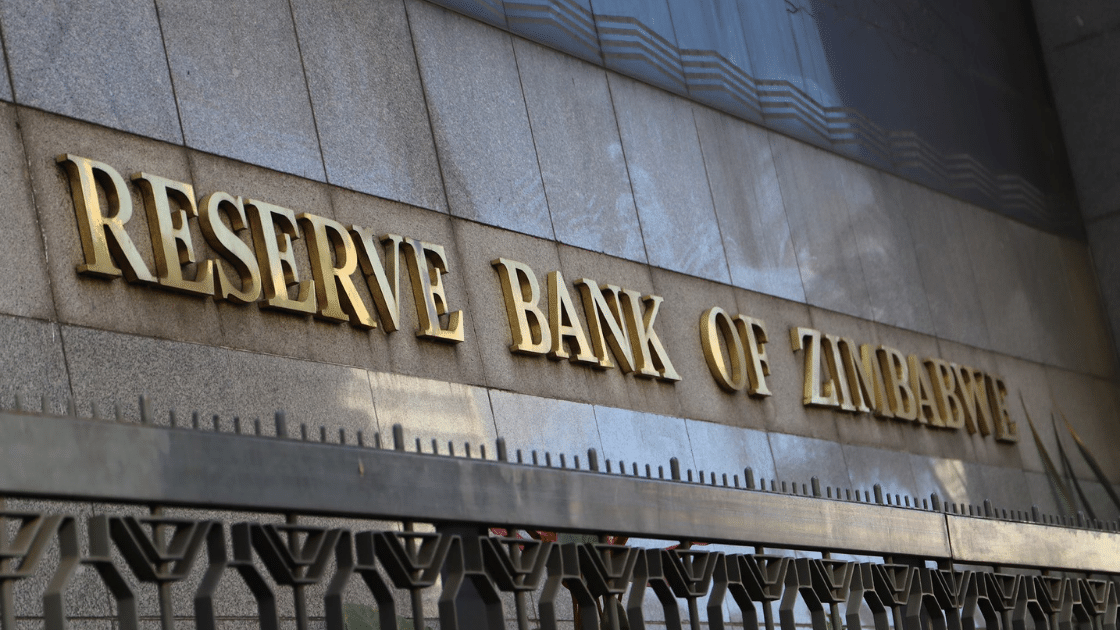

RESOLUTIONS OF THE MONETARY POLICY COMMITTEE MEETING HELD ON 1 DECEMBER 2025
The Monetary Policy Committee (MPC) of the Reserve Bank of Zimbabwe met on 1 December 2025 to deliberate on recent macroeconomic and financial developments, as well as the outlook for the economy.
The MPC welcomed the positive developments on the inflation front, which saw the dissipation of base effects and the deceleration of ZiG annual inflation from 82.7% in September to 32.7% in October and further to 19.0% in November 2025. In this regard, annual inflation is expected to continue declining further, ending the year 2025 at 15-17%, compared to the previously forecast range of 20-30%. For the first time in more than 20 years, local currency annual inflation is expected to reach single-digit levels in the first quarter of 2026. Importantly, the maintenance of a prudent monetary policy stance since September 2024 has been critical in supporting the disinflation process and general macroeconomic stability.
The obtaining macroeconomic stability has created a conducive environment for growth, with the economy expected to grow by 6.6% in 2025, underpinned by strong performances in the mining and agriculture sectors, notwithstanding uncertainty in the global economic growth trajectory.
The country continues to record strong foreign currency inflows, buoyed by the sustained increase in both export earnings and remittances. In the 10 months to October 2025, total foreign currency inflows amounted to more than US$13 billion, over 21% increase compared to the same period in 2024. Reflective of the sustained foreign currency inflows, foreign currency reserves backing the ZiG reached current levels of about US$1 billion, equivalent to more than 1.2 months of import cover. This has underpinned the smooth functioning of the foreign exchange market under the Willing-Buyer Willing-Seller (WBWS) arrangement. Notably, the increase in foreign currency inflows ensured that the foreign exchange market fully met all bona-fide import and foreign payment requirements.
Importantly, the MPC noted that the aforestated positive monetary and financial developments show that the country is making bold strides towards meeting the Conditions Precedent (CPs) for transitioning to a monocurrency by 2030 as announced in the 2026 National Budget and National Development Strategy 2 (NDS2).
The MPC also welcomed the announcement of the 2026 National Budget, specifically the downward review of the Intermediated Money Transfer Tax (IMTT) on the ZiG-denominated transactions, from 2% to 1.5%. This measure is critical to complement monetary policy measures aimed at promoting the wider use of the domestic currency and financial inclusion in support of the eventual transition to monocurrency.
The MPC also noted the launch of the National Development Strategy 2 (2026-2030) under which macro-economic stability and financial sector deepening will be critical for the realisation of Vision 2030 of an Empowered and Prosperous Upper-Middle Income Society.
In line with the NDS 2 objectives and the need to durably anchor inflation expectations and support sustained disinflation, the MPC has resolved to “Stay the course” of the current monetary policy stance as follows:
• To maintain the Bank Policy rate at 35%; and
• To maintain the current statutory reserve requirements for savings and time deposits at 15%, and at 30% for demand and call deposits in both local and foreign currency.
The MPC’s resolutions were underpinned by the need to sustain and entrench the prevailing price, currency and exchange rate stability, to allow the effect of the current monetary policy stance to transmit to the real economy sufficiently and to sustainably anchor inflation expectations. Once a low and stable inflationary environment is entrenched, interest rates will gradually be normalised to support private sector credit and investment, thereby creating favourable conditions for medium-term growth.
The MPC, therefore, reaffirmed its strong commitment to a well-calibrated and data-driven monetary policy stance to sustain the current positive real interest rates environment, which is critical for boosting demand for the ZiG, protecting the value of savings and discouraging speculative borrowing. The positive real rates will foster financial sector deepening as well as revitalise the domestic savings market to support envisaged inclusive growth under NDS2.
Dr. John Mushayavanhu
Governor
1 December 2025